
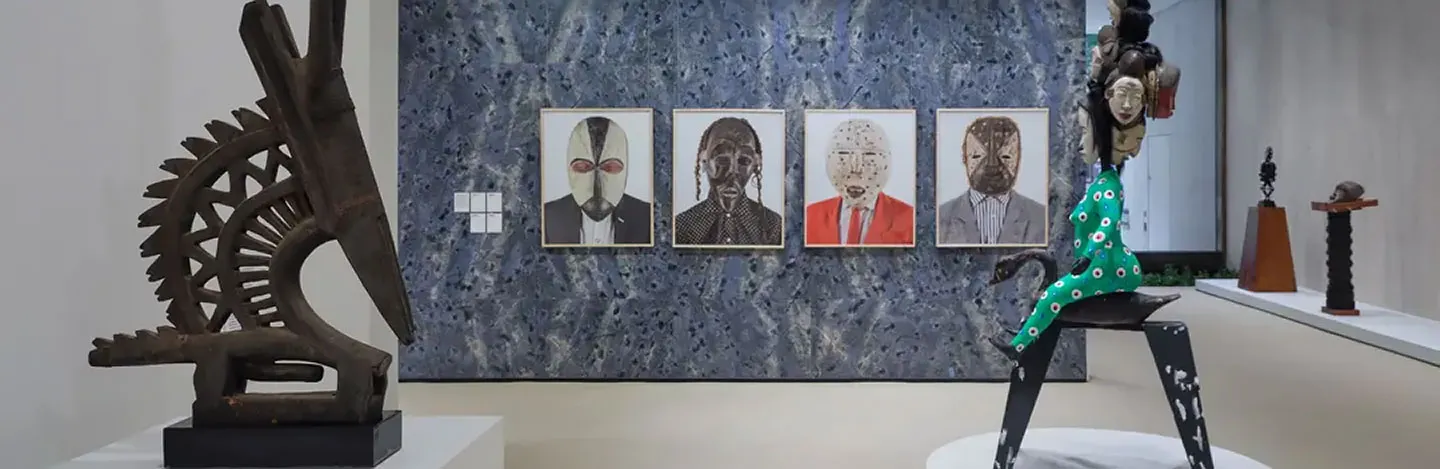
Conversations On Art And Identity
The African Curators Matter: Oral History Project is a global dialogue project that amplifies the voices of African curators who have been instrumental in positioning Africa at the forefront of the global arts landscape. In partnership with Columbia Oral History, the program provides an opportunity for African curators to share their experiences, aspirations, and dreams, while reflecting on their achievements and struggles for recognition and impact on the field.
The project arrives at a moment when critical scholarly research and attention to Black professionals is increasingly being undermined and excluded from the cultural landscape. In these contested times, we want to raise questions and create new pathways to how the future can be shaped? Whose histories dominate our collective imagination? What kinds of interventions can transform this history in times to come? African artists, curators, and researchers have long been marginalized; this project seeks to recognize their contributions. As the title insists — “African,” “Curators,” “Matter” — it offers a meaningful entry point into the profound impact African curators have had on the world’s visual arts and culture.
Taking inspiration from visionaries such as Okwui Enwezor and Bisi Silva, curators today have reshaped the global art narrative — bringing African perspectives, histories, and contemporary practices into international dialogues. Their work has redefined how art from the continent is understood and displayed, while also challenging entrenched power dynamics in the global art world. In doing so, they have created pathways for diverse voices to be heard and acknowledged, contributing to a broader, more inclusive understanding of contemporary art.
Building on an earlier oral history project called Black Curators Matter, this project highlights the lives and experiences of three influential African curators — Koyo Kouoh, Elvira Dyangani Ose, and Tumelo Mosaka — working on the African continent and across the Diaspora. Ilesanmi conducted all three oral history interviews. With lives and careers spanning geographies such as Cameroon, Senegal, South Africa, Equatorial Guinea, DRC, Martinique, Spain, Switzerland, and the United States, the curators featured have been invaluable advocates and resources for African and Afro-diasporic artists. Their stories provide intimate insights into multifaceted journeys as exhibition-makers, institutional builders, and community leaders. They illuminate a deeper understanding of Black struggles and triumphs in the arts.
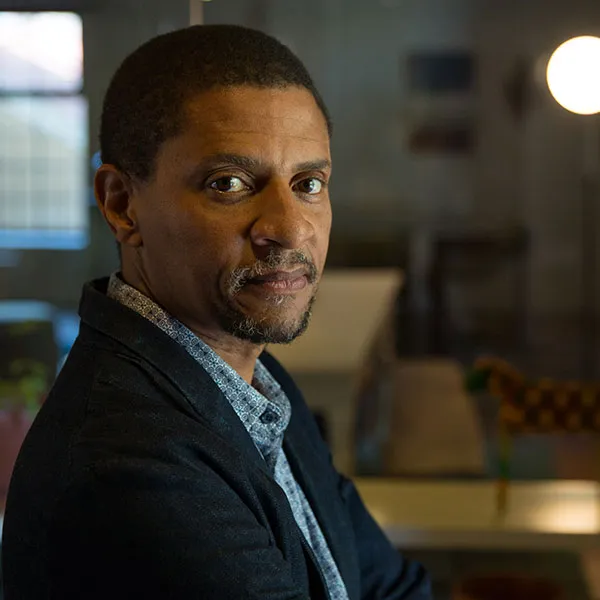
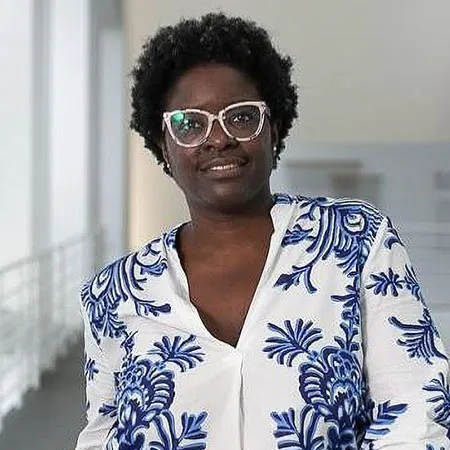
Tumelo Mosaka is a Johannesburg-born and New York-based independent curator. He has worked within and outside museums exploring global transnational artistic practices, especially from Africa, the Caribbean, and North America. He has curated numerous exhibitions including "Between Distance and Desire: African Diasporic Perspectives," (2025) NY, "Fragmented World / Coherent Lives," (2023) Opa-locka, FL; "YAKHAL’ INKOMO," (2022-23) Javett-UP Art Center, University of Pretoria, South Africa; "Usha Seejarim," (2020), Kunstinstituut Melly (Formerly known as Witte de With), Rotterdam; "Turning Tide," (2017), Mémorial ACTe Museum, Guadeloupe, and "Poetics Relation," (2015), Perez Art Museum, FL among many projects.
Previous positions include chief curator for Investec Cape Town Art Fair, South Africa, curator at the Krannert Art Museum (KAM), Urbana-Champaign, Illinois and associate curator at the Brooklyn Museum, NY where he curated the landmark exhibition "Infinite Island: Contemporary Caribbean Art" (2007). Mosaka is currently the Mellon Arts Project Director at the Department of African American and African Diaspora Studies, Columbia University.
Koyo Kouoh (1967–2025) was a trailblazing curator, institution builder, and most recently the executive director and chief curator of Zeitz MOCAA, a position she held from 2019 until her sudden passing in 2025. Born in Cameroon and raised in Switzerland, she founded RAW Material Company in Dakar in 2008, establishing one of Africa’s most vital centers for art, research, and residency programs.
Before founding RAW, she worked with the Goethe-Institut, the Gorée Institute, and the U.S. Embassy in Senegal. At Zeitz MOCAA she oversaw a major institutional transformation and curated landmark exhibitions, including the acclaimed survey "When We See Us: A Century of Black Figuration in Painting" (2022). Her international projects included "Body Talk" (WIELS, 2015), "Still (the) Barbarians" (EVA International, 2016), "Dig Where You Stand" (Carnegie International, 2018), and the research initiative Saving Bruce Lee (HKW / Garage Museum).
In December 2024, Kouoh was appointed Artistic Director and Curator of the 61st Venice Biennale (2026) — the first African woman to serve in the role — but passed away unexpectedly in May 2025. Her curatorial framework, In Minor Keys, will be realized posthumously by her team of curatorial advisors for the 2026 exhibition.
Marie Hélène Pereira (b. 1986, Dakar, Senegal) is a curator and cultural practitioner whose work engages histories of migration and the politics of identity. She is senior curator for Performative Practices at Haus der Kulturen der Welt (HKW), Berlin, and previously served as director of Programmes at RAW Material Company, where she has been active since its founding in 2011.
At RAW she organized contributions to "We Face Forward: Art from West Africa Today" (Whitworth Art Gallery, Manchester), the "ICI Curatorial Hub" (New York), and the 9th Shanghai Biennale (2013). Her curatorial projects include "Scattered Seeds" (Cali, 2015–2017), "Battling to Normalize Freedom" (Clark House, Mumbai, 2017), and a section of Dak’Art 2018 titled "Canine Wisdom for the Barking Dog" (with Bonaventure Ndikung). She was part of the artistic team of the 12th Berlin Biennale (Still Present!) (2022) and received the ICI Curatorial Research Fellowship in 2021. Pereira is currently a curatorial advisor for the 61st Venice Biennale, supporting the realization of the late Koyo Kouoh’s artistic vision for In Minor Keys.
Elvira Dyangani Ose (b. 1974, Córdoba, Spain; family from Equatorial Guinea) is a curator recognized for multidisciplinary projects that examine public space, collective memory, and non-Western epistemologies. She is director of MACBA, Museu d’Art Contemporani de Barcelona, a role she has held since 2021, and previously served as director and chief curator of "The Showroom," London (2018–2021). She holds degrees from the Universitat Autònoma de Barcelona, Universitat Politècnica de Catalunya, and Cornell University.
Early curatorial roles at the Centro Atlántico de Arte Moderno (2004–2006) and Centro Andaluz de Arte Contemporáneo (2006–2008) included exhibitions such as "Olvida Quien Soy / Erase Me From Who I Am" (2006) and "Attempt to Exhaust an African Place" (2007–2008). She later organized "Arte Invisible" (2009–2010), "Carrie Mae Weems: Social Studies" (2010), and contributed to "SUD – Salon Urbain de Douala."
At Tate Modern (2011–2014), she worked with the African Acquisitions Committee and led the cross-continental project Across the Board. She curated the 8th Göteborg Biennial (2015), served as senior curator at Creative Time (2017), and has published widely on African and diasporic art. She is co-curator of the touring exhibition "Project a Black Planet: The Art and Culture of Pan Africa," presented at the Art Institute of Chicago (2024) and the Museu d’Art Contemporani de Barcelona (2025).
Kemi Ilesanmi, interviewer
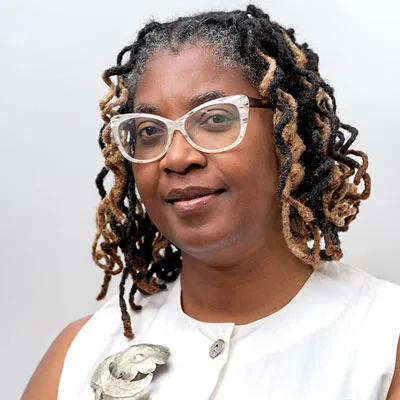
Kemi Ilesanmi is an arts strategist, institution builder, and diaspora weaver. As Founder and Principal of KGI Projects, she cultivates strong and sustainable Black and Brown arts ecosystems in the United States and African diaspora. For over 25 years, she has served as nonprofit leader, foundation officer, museum curator, and now consultant, advisor, and connector.
As executive director of The Laundromat Project, she grew the nationally-recognized community arts organization tenfold in impact and budget. Prior to that, Kemi held key roles at Creative Capital and the Walker Art Center. Along with recognition from the Metropolitan Museum and New York Times, Kemi has been featured in diverse international media, and she serves on several boards and advisory councils. A graduate of Smith College, NYU, and Coro Leadership NY, she is committed to holistic cultural and community care that is deeply informed by her Nigerian and Black American roots.