
Conversation with Colby King, CC’22
This is the second in an ongoing series of profiles about Department alumni who will discuss what led them to Black Studies at Columbia and their experiences as a student, as well as share advice for prospective and current students.
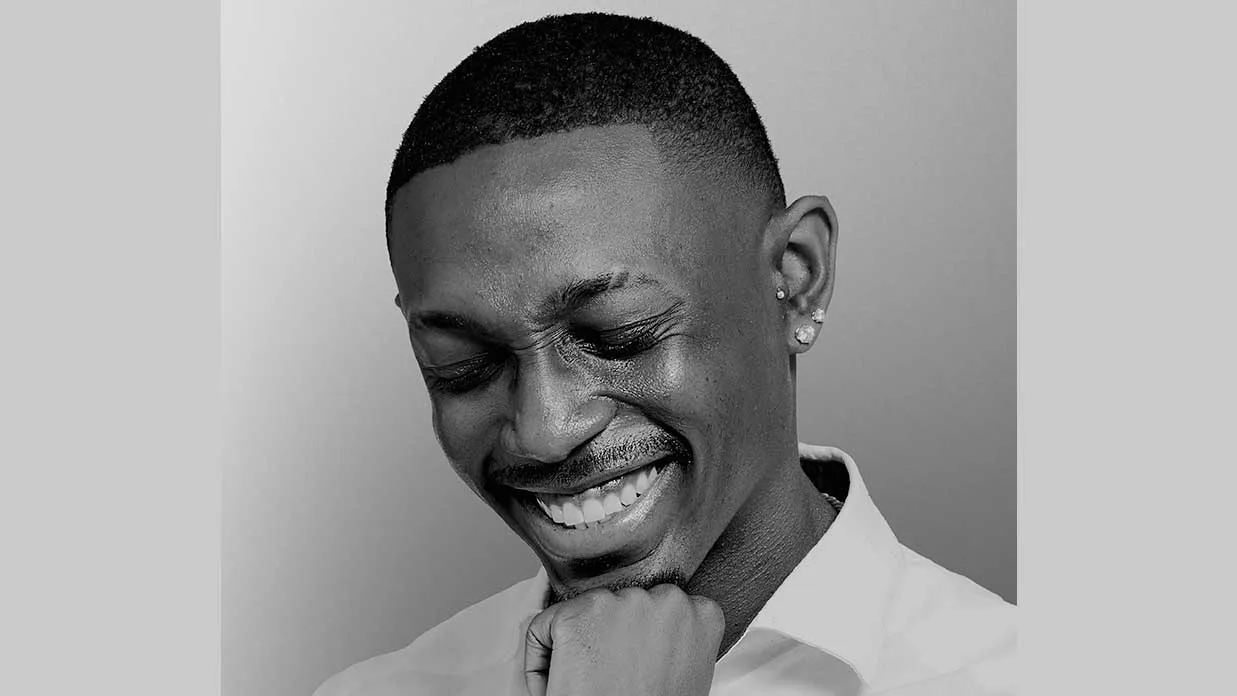
Colby King is an arts leader, educator, and advocate whose work sits at the intersection of culture, justice, and community. He was recently named this year's winner of The David Prize in recognition of his work building pathways for queer and trans artists of color and preserving the cultural legacy of the Kiki ballroom community. He is a co-founder and executive director of the Kiki Arts Collaborative, a multidisciplinary platform that combines professional development, archival research, and public programming to support emerging artists and expand access to the creative economy.
A graduate of Columbia College with a BA in African American and African Diaspora Studies and Psychology, King served as chair of the University Senate’s Diversity Commission and was recognized with the Ralph Bunche Award for Leadership and Service as well as the Charles Bjorkwall Prize.
What led you to Black Studies?
“When I first enrolled in undergrad, I actually was a chemical engineering major. My goal, in fact, what I wrote all my college application essays about, was the idea of using engineering and principles of engineering to solve issues of racism. And so with that goal in mind I also wanted to do a concentration in African American and African Diaspora Studies.
“I grew up in majority Black communities in Texas, both in Houston and Dallas. My mom was a minister of a Baptist church, so the church and social justice through the church was always a part of my life, so I had always had an interest in it.
“When I found out that you couldn't actually concentrate in Black Studies if you were in the engineering school, I transferred over to major in AAADS, and then I ended up focusing on Religion in particular.”
What was the most transformative course you took at Columbia? Who taught it? Most impactful reading, discussion, performance, artwork, event, et. al.?
“My freshman spring, I took, Dr. Josef Sorett's “Black Memoir” course. The course analyzed a series of memoirs starting with W.E.B. DuBois’s “Souls of Black Folk,” and then translated that important work through other memoirs up to 2019.
“It was probably the most fun course I took at Columbia. The only other one I would say that is up there is Prof. Sorett’s “Gospel Music in America” course.
“They were all very fun readings, but my favorite was, Patricia J. Williams' “The Alchemy of Race and Rights.” … It gave me a different way of viewing so many things…It’s one of my favorite books, its actually still on my shelf and I’m about to reread it.”
What are you doing now and how did Black Studies at Columbia shape, perhaps even alter the trajectory of what you would do?
“My full-time day job, after graduation, I've been in marketing, digital marketing, both for American Express immediately, and now I'm at Justworks, which is an HR payments tech company.
“…I definitely think the critical thinking skills and all the things I developed through the African American and African Diaspora Studies Department, helped me, but where I use my, degree more, I would say, is outside of my day job. Recently, I started an initiative dedicated to supporting LGBT artists of color, primarily – Black, trans, and queer artists of color – to help them develop their creative careers, both as artists, creative professionals, cultural practitioners, thinking through how we make sure that they can sustain themselves using their creative talents, specifically those through the ballroom scene, which is a subculture, a Black LGBT subculture developed in Harlem back in the ‘50s, and you really can trace it even further back to just Black drag balls going all the way back to slavery.
“…I was interested in understanding Black religions generally, and then, in particular, their relationship to gender and sexuality. That was something that, as a Black queer person who grew up in church, I was always interested to understand the tensions between those things.
“…Through this organization, which is called the Kiki Arts Collaborative, I've been able to support members of the ballroom community in New York City in getting opportunities to perform, teach, be on panels, have artist talks everywhere, from American Express to the Bronx Academy of Arts and Dance.
What advice would you have for students considering a degree in Black Studies?
“…Because Black Studies is so interdisciplinary, I believe that it actually challenges the way you think in a way that no other degree can do. Because I was a Black Studies major, I was able to take courses in everything from psychology to sociology, anthropology, urban studies, religion, and then go deep; that actually helped me make connections across disciplines and research questions that I wouldn't have come to if I didn't think that way from a Black Studies perspective.
“…People think, oh, I don't need to study Black people because I'm already a Black person. And I believe that people have to think, beyond that, because it's not just about studying Black people, it's about studying how the world is structured. And understanding that the ways that we might have been taught about things growing up aren't necessarily what they are or have been.
“And so, for anyone that is considering a major in Black Studies, I would say if you want something that is going to challenge your world this is the area of study in which to do it.”