
A Conversation with Katori Hall CC’03
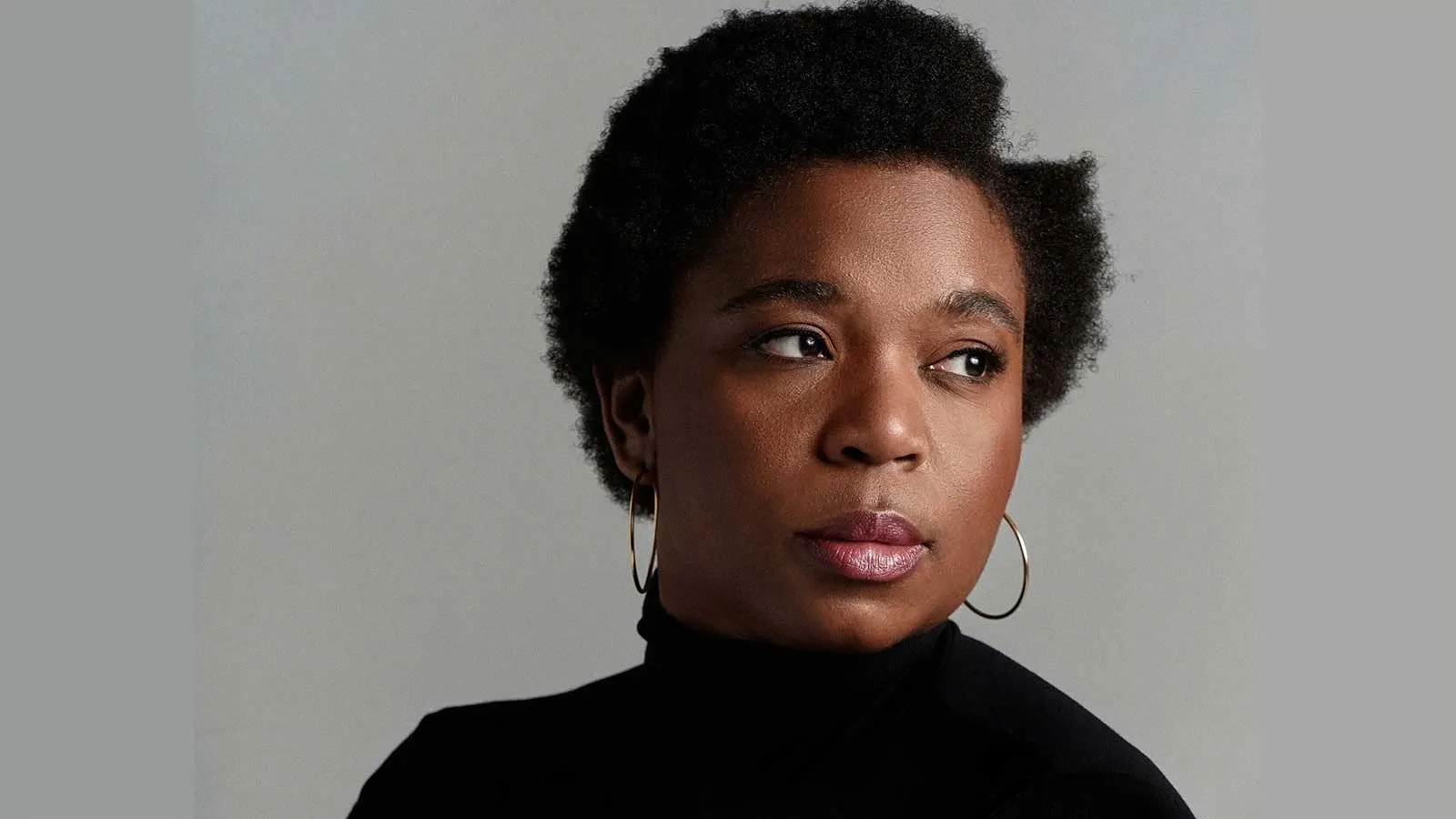
Katori Hall is a Pulitzer Prize and Olivier Award-winning playwright and television creator/producer hailing from Memphis, Tennessee. A two-time Tony Award nominee, she won the 2021 Pulitzer Prize for Drama for her play, “The Hot Wing King.” She is currently the showrunner and executive producer of the Starz drama series, “P-Valley,” which she adapted from her stage play “Pussy Valley.” For Broadway, she wrote and produced the hit musical, “Tina: The Tina Turner Musical,” based on the life of the iconic performer, receiving two Tony Award nominations for her work as both playwright for Best Book of a Musical and as producer in the Best Musical category. For the musical’s acclaimed West End production, she also received an Olivier nomination for Best New Musical.
What led you to Black Studies?
“My story's a little bit complicated. I came to New York from Memphis, Tennessee, and I'm very blessed I had a family that really taught me about my history, so it always felt like I was in an African American Studies class at the dinner table….
“I thought I was going to major in journalism or English or theater, because I loved writing, I loved drama. But eventually I felt like African American Studies was the home for me, due to the fact that now I would be able to use all of this knowledge that I hadn’t known about my own people, infuse it with the many beautiful stories that my parents gave to me at the kitchen table, and create art.
What was the most transformative course you took at Columbia? Who taught it? Most impactful reading, discussion, performance, artwork, event, et. al.?
“I took a course in African American literature with Farah Griffin. Professor Farah Griffin. THE Farah Griffin. And, that's when I knew I was on the right path in terms of being able to highlight history and be inspired by the truth, but also use fiction in order to tell the truth. I feel very blessed as a Black woman that I have so many different points of inspiration. People are always asking me, do you get writer's block? I'm like, hell no, I am a Black woman in America. I got a lot of shit to write about!
“Being taught by this amazing woman [Dr. Griffin], who literally is beautiful on the inside and out. She opened our eyes and exposed us to so many different writers and ways of having a voice as a Black woman, and also as a Black person in America. I think her class was a very transformative experience.
“And then I was very blessed that I was taught by Dr. Manning Marable. I remember there was this one moment when I was too scared to speak in class. I remember sitting in Prof. Marable’s class, not talking and one day he looked at me and said: “I think you have something to say.” We had been talking about, Ntozake Shange's “For Colored Girls.” And that was a play, a world, and a writer I knew so much about and that was the first time I spoke up in class. That’s how I ended up participating, not only in class settings, but also participating in the world with my own voice that wasn't on paper.
“I also had insecurities about how I spoke, because, as you know at Columbia, there's a lot of smart people. And if you don't speak a certain way, people are going to look at you a little side-eye-ish, right? I came from the American South, and I spoke, and still do, with a particular dialect of African Americans who are from the South. And I will admit, I was made fun of and felt ashamed sometimes. But then I felt kind of fortified when Dr. Marable demanded that I speak up. It was also part of my grade anyway, so my ass should have been talking.
What are you doing now and how did Black Studies at Columbia shape, perhaps even alter the trajectory of what you would do?
“I was always going to write about my people. During my college experience, I doubled down on the kind of fortified house that I was building; this house that is a constant homage to the past of Black folks here in America, our present, and hopefully our future….
“Currently, I'm finishing up my third season of “P-Valley,” in addition to beginning to develop other TV shows that center the Black experience. But, one thing I don't want to ever get away from is my first love, which is theater.
“Over the last few years, I've wanted to come back home in a lot of different ways. Theater is my home when it comes to my artistic voice, but my home is also Memphis, the city where I was born, my hometown. That's my beloved and I'm very adamant about continuing to write about the past, present, and future of that particular city. So, I'm kind of quadrupling down on the stories that are Memphis-made and Memphis-born, because I feel my city has so much to say about where we are.
“In American society at this very, very turbulent moment, I want to bring historical stories to the forefront, but also, detail what's happening now. For example, I'm working on a play called “Boxtown,” which is about a neighborhood in Memphis that was established in 1863 and now Elon Musk has built an AI supercomputer at the edge of it. I'm interested in how we have this new information revolution that is continuing the environmental racism that many people in that particular community have faced before. Historically, there's been a lot of EPA violations, as the community has been a dumping ground for heavy industry for years. We also know there's a great need for water in order to cool these data centers. So, I'm really interested in looking at how there are people who think they're pulling us into the future, but they're actually continuing to replicate the racist systems of the past….
“I always knew the history of Memphis. Thank God for my mother, who was hell-bent on all of us understanding where we came from, and knowing what our place was in history and in the civil rights movement—like the fact that Dr. Martin Luther King Jr. was assassinated in 1968 in Memphis. These moments of huge historical transformation were things that happened in my own backyard.
“The education that I received through African American Studies helped me connect the dots on the stories and history that was happening in my hometown with everything that was happening throughout the diaspora. It helped me understand how connected our struggles are around the world. It made Memphis feel small and epic all at the same time, because it felt like Memphis was a part of this bigger story of revolution that was happening, is happening, and always happening worldwide.”
What advice would you have for students considering a degree in Black Studies?
“I feel like there's such a centering power when you have all of this information about yourself and how you fit within this specific history of African Americans. But also, the fact that African American history is American history. American history is world history. Our story of how we got here, why we're still here, and how we are always a barometer of freedom in this country is such an inspiring fact to know.
“No matter if you go into computer science, become a doctor, or become a lawyer, African-American studies can be a brick inside your brain that is the foundation of an amazing house that you're building out into the world. I just think African American Studies has been such a blessing to me.
“And you ain't just gotta be Black to do it, like you could be someone from India who wants to learn about Black studies. We are beautiful people and to study us in every way empowers and inspires you when you go out into the world….
“It really makes your storytelling powerful, deft, and innovative. I think the more knowledge you have about a group of people or a subject matter the better off you'll be when that hand comes down to the page to create. Like I said, I never get writer's block. I think it's because I can just go to my bookshelves where I still have some of my African American Studies books.
“Just being inspired by these writers, whether they're writing fiction or things that are more like a dissertation completely transformed my writing. Because I'm very much a research-based writer, and oftentimes when I'm looking at a point in history when I wasn't alive, I always look to the books of amazing professors that can provide me with the necessary information and inspiration I need to tell the truth, to use fiction to tell the truth.”