
A Conversation with Walter A. Jean-Jacques BA ‘14
As a freshman at Columbia, Jean-Jacques had an internship with the National Urban League, where he now works as an attorney.
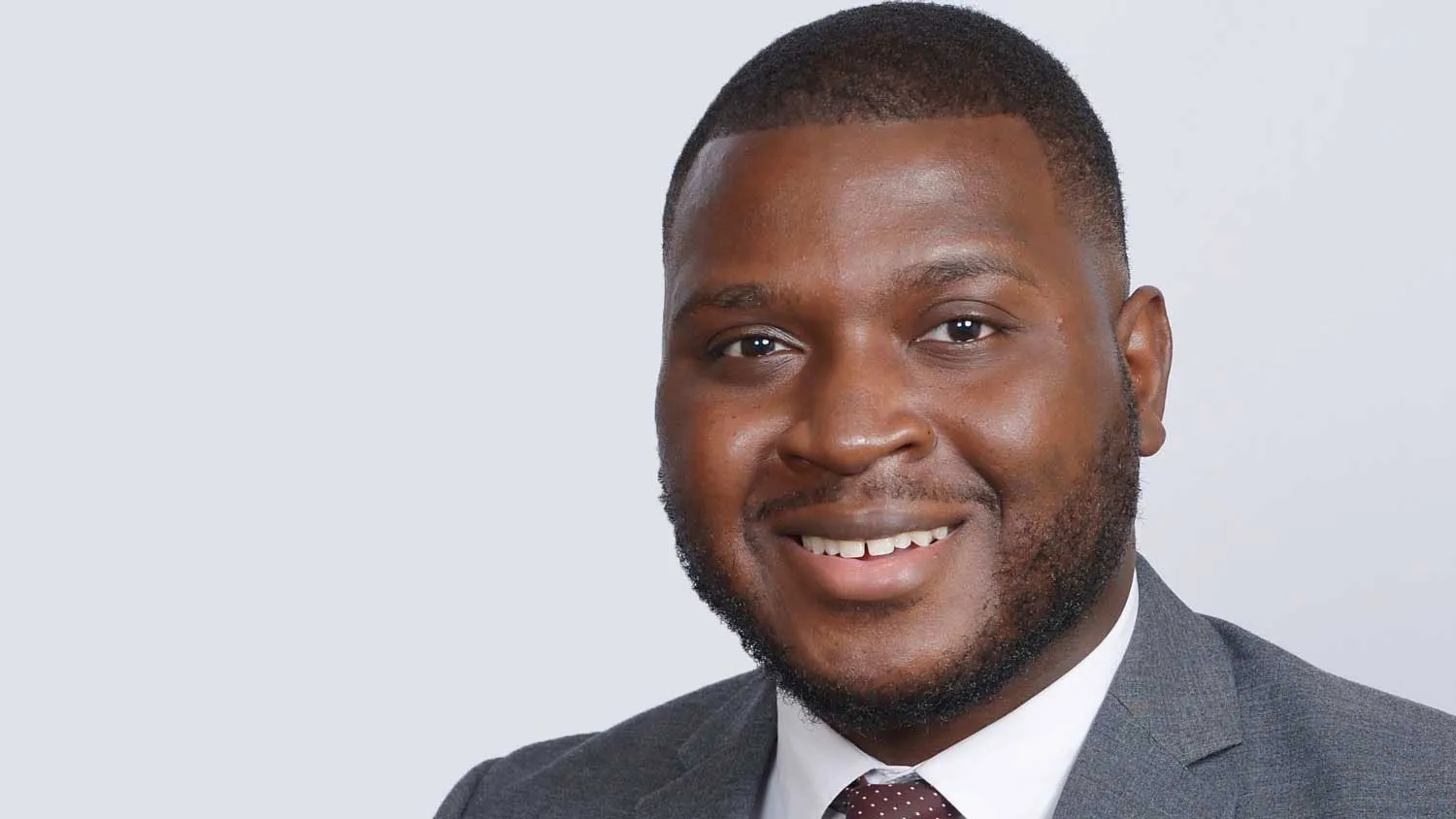
Walter A. Jean-Jacques BA ’14 is the assistant general counsel for the National Urban League in New York City. He is a former litigation fellow at the NAACP Legal Defense and Educational Fund, Inc. in Washington, D.C., where he focused on racial justice litigation. Additionally, he is a former judicial law clerk in the U.S. District Court for the District of Connecticut. Jean-Jacques is the Co-Chair of Dean Alumni Advisory Board for the University of Pennsylvania School of Social Policy and Practice, Board Member for the University of Pennsylvania Alumni Board and University of Pennsylvania School of Social Policy and Practice Board of Advisors, former Board Member for Equal Justice Works, and former inaugural Advisory Board Member for the Klau Institute for Civil and Human Rights at the University of Notre Dame.
He earned a BA in African-American Studies with Honors and Political Science from Columbia University, an MS in Social Policy from the University of Pennsylvania, and a JD from the University of Notre Dame Law School, where he received the David T. Link Award for outstanding service in the field of social justice and Alvin McKenna Alumnus of the Year Award.
What led you to Black Studies?
“I was always a person who was fond of Black studies and studied, when I was in high school, the Harlem Renaissance, which is one of the things that attracted me to Columbia. The first course that I took was Negritude. It was such an amazing, neat course that talked about both the impact of the Harlem Renaissance in the United States, as well, throughout the African diaspora.”
“That was such an eye-opening course, because it allowed me to see the duality, the intersectionality of Black studies, whether it's through, literature, policy, I would even say, communication, sociology. I was able to see the importance and the intersectionality of Black studies via that course.”
“It had me so, I would say, enthralled at being able to focus my academic trajectory from that respective course. I always say this, it was the best decision that I made at Columbia, because it was not only the rigor of the academic work, but it was also the community. It allowed me to dive into a realm of academia in which I did not even believe at the time as a freshman was obtainable.”
What was the most transformative course you took at Columbia? Who taught it? Most impactful reading, discussion, performance, artwork, event, et. al.?
“It was a course on Haitian and Dominican relations. For me, being of Haitian descent, Haitian American, it was everything, because I was able to learn about the Haitian-Dominican relations. I was able to read a book,“The Devil Behind the Mirror” by the late, great Professor Steven Gregory.”
“I believe that those two courses were foundational. Negritude, in particular, was foundational because of it opened to me an array of the multitude of Black studies, not only both the domestic impact, but as well the international impact….”
What are you doing now and how did Black Studies at Columbia shape, perhaps even alter the trajectory of what you would do?
“It's because of IRAAS in so many different ways, and Black Studies, that I'm currently doing the work that I truly envisioned myself doing, and so this is just a phenomenal opportunity to express that, and to be able to share that….”
“I've been working at the National Urban League as an assistant general counsel for about three years. So that shows the full circle, the impact of my experience taking that course, and how that has, effectively impacted my career. It's been a long journey….”
“Being a Black Studies major the depth, the rigor of the courses I was able to take, the privilege to be taught by and advised by renowned professors in Black Studies like, for example, Dorian Warren, who was both a professor of Black Studies and political science at the time, and those people who were able to pave the way and mentor me….”
“I would not be the legal scholar that I am currently, or be the advocate that I am without being enthralled and learning about movements, taking courses that talked about transnational relations….”
“It was because of Black Studies, learning about the importance of the NAACP Legal Defense Fund, the type of cases that they worked on such as Brown v. Board of Education and voting rights, the advocacy work that they're able to do. That allowed me to be able to have both, I would say, the history and the policy context in terms of the work that I wanted to do. So, I would not have had that if I wasn't a Black Studies major. And it has shaped me in terms of being the advocate that I am today.”
“Knowing how to and having the privilege to draft amicus brief that goes all the way up to the United States Supreme Court, and learning that the histories and the historical context and the cases that I worked on—I got that from being a Black Studies scholar. And I think that without having that background, I would not be the well-prepared advocate and litigator that I am.”
What advice would you have for students considering a degree in Black Studies?
“This decision that you will make to pursue Black Studies will open doors and will break barriers that you may not think will be in front of you. And what I mean by that is that there may be systematic barriers and trajectories that you may have to tackle entering the realm of Columbia. Being a Black Studies major will equip you with the skill set, will equip you with the analytical skills, will equip you with the communication talent. It will equip you with the advice and mentorship from the A+ quality of professors that the Black Studies Department at Columbia offers.”
“Now it's been about 16 years later since I entered my first course in Black Studies at Columbia that I truly benefited from. I look back every day and say how thankful I am for taking a very bold step, because at the time, I was a freshman, and I was taking the classes with seniors. I am thankful for being able to step into that class that fall Tuesday in September of 2010, and to not be afraid to sit down and participate in a seminar discussion with seniors and to be able to hold my own.”
“It was because I was able to understand the empowerment that the Black Studies Department at Columbia had offered, and how it was able to mold students just like myself, I know that I'm one of many alumni who have been pivotal leaders because of the skill set, the tools, and the mentorship that we're able to gain from the Black Studies Department.”