
A Conversation with Zinga A. Fraser, MA’05
Zinga A. Fraser is an associate professor of Africana Studies at Brooklyn College, where she is director of The Shirley Chisholm Project on Brooklyn Women’s Activism.
This is the first in a series of profiles about Department alumni who will discuss what led them to Black Studies at Columbia and their experiences as a student, as well as share advice for prospective and current students.
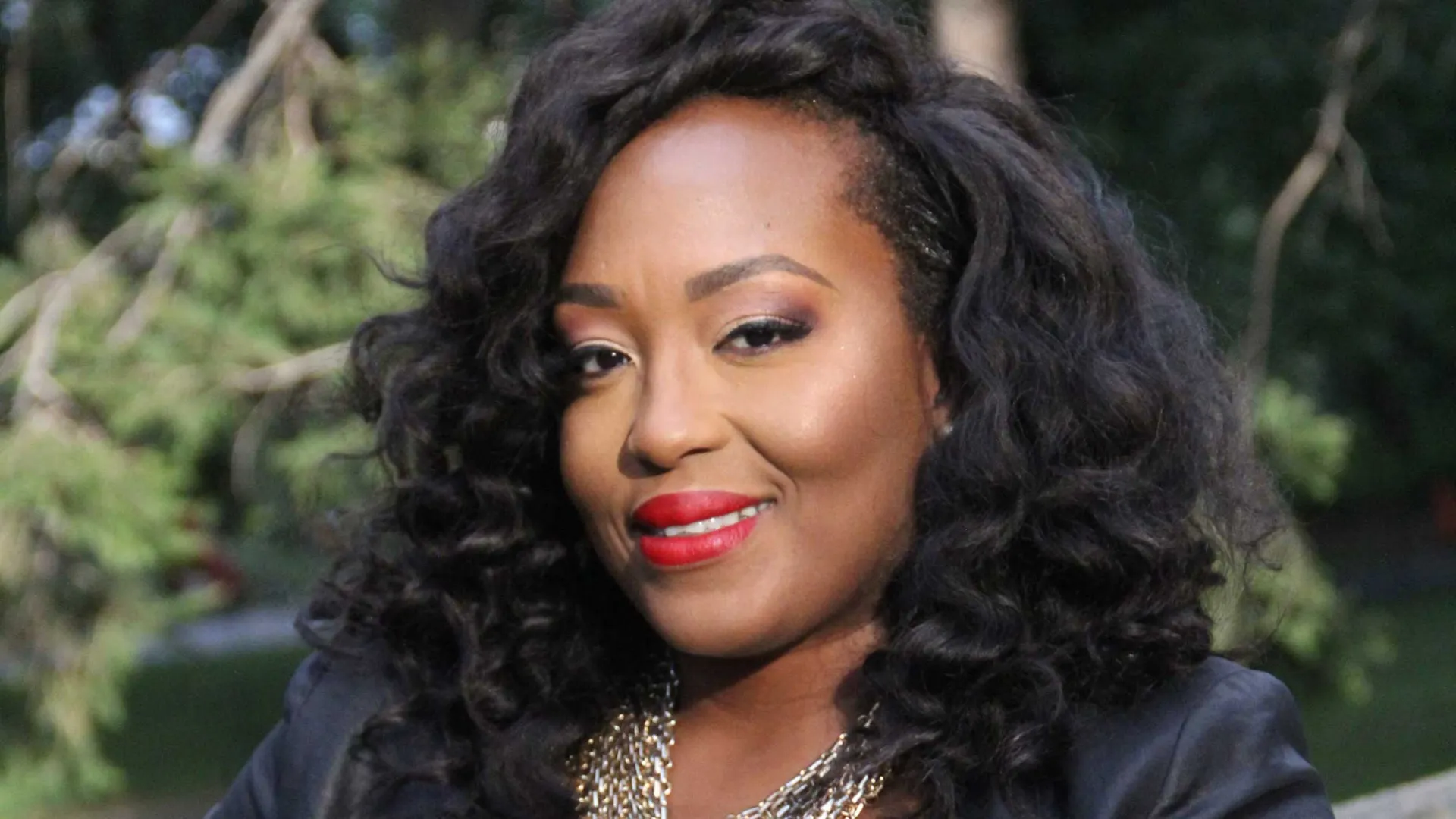
Zinga Fraser is an associate professor of Africana Studies at Brooklyn College, where she is director of The Shirley Chisholm Project on Brooklyn Women’s Activism. She was a Paul Robeson Fellow at Columbia’s African American and African Diaspora Studies Department, where she earned a Master of Arts degree in 2005 (note: the MA program at that time was housed in the Institute for Research in African American Studies). In 2014, she completed a PhD in African American Studies at Northwestern University. Fraser co-curated “Shirley Chisholm at 100: Changing the Face of Democracy” that was on view at Manhattan’s Museum of the City of New York from June 2024 to July 2025. And she also recently published a collection of Chisholm’s writings in “Shirley Chisholm in Her Own Words" (University of California Press 2024).
What led you to Black Studies?
“My desire to go to Columbia was not necessarily this desire to become an academic like I am now. It was really to provide another lens to allow me to do work in the public sector. The innovative scholarship, teaching, and activism that Dr. Manning Marable and other faculty were doing taught me a great deal on the ever expansive field of Black Studies.
“My approach as a MA student was: how could I use this degree as a path to professionalization that provided me with a toolset for addressing issues around , race gender and politics? I always tell my students, think of academia or getting a professional degree, whether it's graduate or a PhD, as providing you a unique skill set that you don't get anywhere else.
“So, at Columbia, and because I'm a native Brooklynite, it allowed me to connect to the communities that I grew up with, that I had an affinity to, and that I advocated for in terms of my commitment to public service and social justice.”
What was the most transformative course you took at Columbia? Who taught it? Most impactful reading, discussion, performance, artwork, event, et. al.?
“There are two classes that were really profound in how I thought about Black Studies, and really changed the trajectory of my life in terms of professionalization. One was Intro to African American Studies with Professor Marable, and the other was his Malcolm X project class; it was his first seminar on Malcolm X.
“I'll start with the Intro to African American Studies, because I think it was profound in its influence and that it was a foundational class, one that I go back to every time I teach Intro to African American Studies at Brooklyn College, which is almost every other semester.
“Intro to African American Studies provided the foundation to the debates of the field. It provided intellectual groundings, but it also allowed you as a student to understand what Black Studies was about. Professor Marable grounded everyone in that course in how to think about Black studies beyond the walls of academia, beyond the gates of the ivory tower. He connected the course with his own research and at the time a conference rethinking Black Studies. He selected 3 or 4 students from the class to publish a piece about the conference in the journal Souls and it was my first peer reviewed article. What was significant about the student response paper was his generosity and genuine interest in how young MA students saw the field. He believed in our voices and provided space for everyone in that class to explore .
At that time Professor Marable was also writing and researching his seminal work that became the Pulitzer Prize-winning Autobiography of Malcolm X: Malcolm X: A Life of Reinvention." In that class he wanted us to do innovative work on reimaging the life and legacy of Malcolm.
“Now, as a curator and an archivist, it was really helpful to kind of think about the innovative work that Black Studies can do. That Black Studies, as he would say, should not be confined to the places that we inhabit, whether it's Schermerhorn or other places on Columbia’s campus, but it should be as relevant and as poignant to the people on 125th Street.
What are you doing now and how did Black Studies at Columbia shape, perhaps even alter the trajectory of what you would do?
“Since my time at Columbia, my project has been has been to focus on the life and legacy of Shirley Chisholm. I have recently finished a manuscript on Shirley Chisholm and Barbara Jordan, a political history of their politics in my forthcoming book "Sister Insider/ Sister Outsider: Shirley Chisholm and Barbara Jordan, Black Women’s Politics in the Post- Civil Rights Era."
“In my research I had to grapple with the absences of who Shirley Chisholm was, being the first African American woman elected to Congress, being the first woman and the first African American to run for the presidency, and yet there was almost nothing about her in histories of US politics.
“There wasn't at that time a documentary about Chisholm and so there wasn't even a discussion in the public domain of who she was. Being at Columbia allowed me and trained me to hear the silences, see the invisibility of marginalized people, and it allowed me to have the skill set to do the kind of work to uncover who Shirley Chisholm was, not just in terms of the first, but thinking about her in a larger context around intellectual history and political activism.”
What advice would you have for students considering a degree in Black Studies?
“The advice that I have, which I can see now, but I didn’t think of then, is that the world is really vast. Black Studies provided me with a certain skill set that allowed me to do a number of things. It made me an interdisciplinary scholar and gave me a toolkit to do what I do now inside and outside of the academy.
“What I would also tell students to do is really understand what the field is. And what I mean by the field is that just because you examine the lives of African people throughout the world doesn't necessarily make you a Black Studies scholar. You can study Black people in the field of English, you can study people in the field of history, you can study people in political science, but that doesn't make you a Black Studies scholar. What matters most goes back to what is the purpose of the field of Black Studies. And that purpose, at least according to Professor Marable, to others, and now to me, is to make work relevant to the lives of the masses especially those within the African diaspora. The work is created to be beneficial to them, whether its preserving history or finding a solution to a structural injustice .
“And to make relevant work requires you not only engage the concepts, the theories, and intellectual histories, but it also makes sure that that your work is accessible and palatable for a range of different people in a different areas and different contexts. Being a part of Black Studies requires a certain kind of responsibility to others beyond the academy. And if you're not about that commitment, then I'm not sure if this is the field for you. But if you are, then Black Studies is an open forum, wide open for people to engage and make a difference.”