
Nikole Hannah-Jones discusses white nationalism and media’s failures
Journalism Dean Jelani Cobb interviews Hannah-Jones, creator of The 1619 Project, at annual Shawn “Jay-Z” Carter Lecture
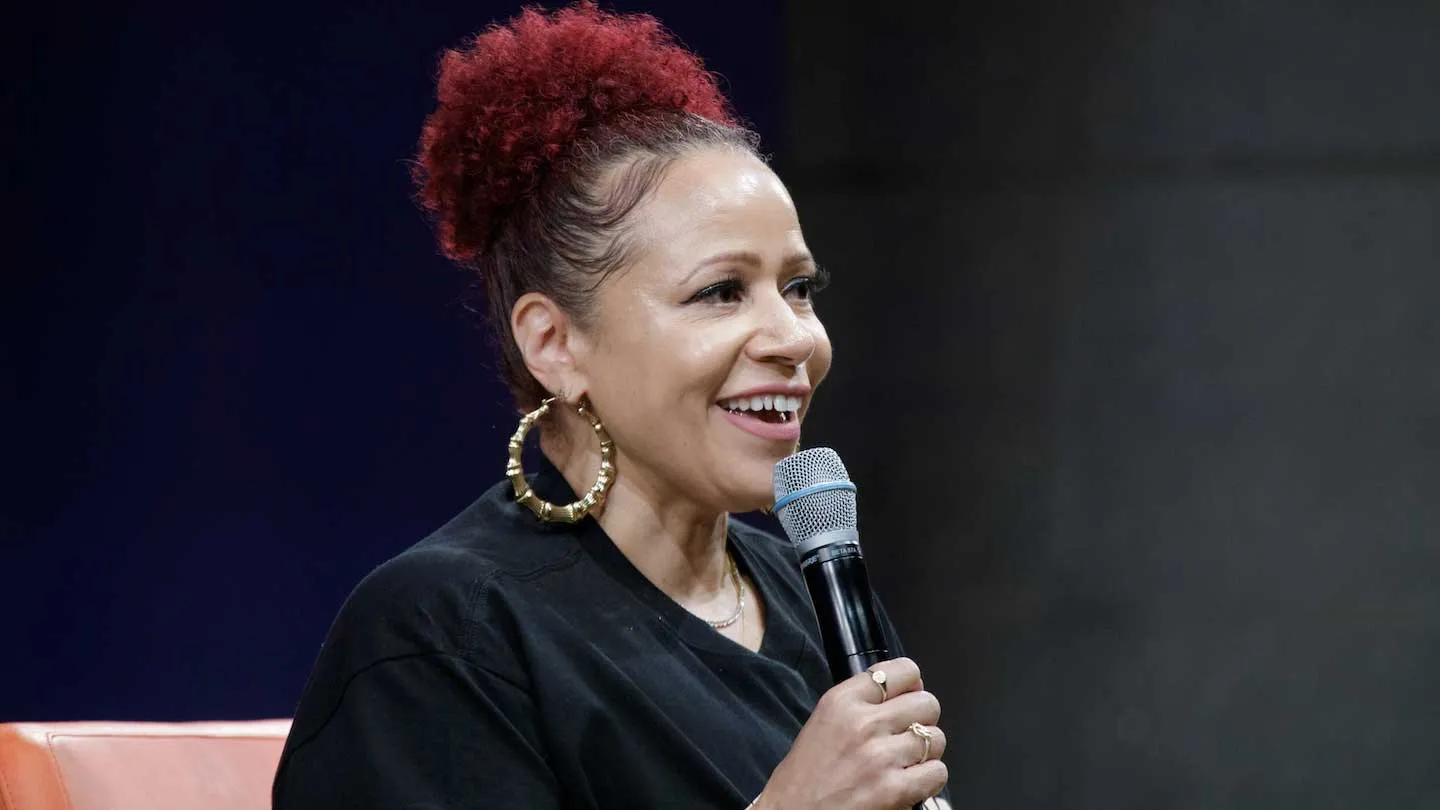
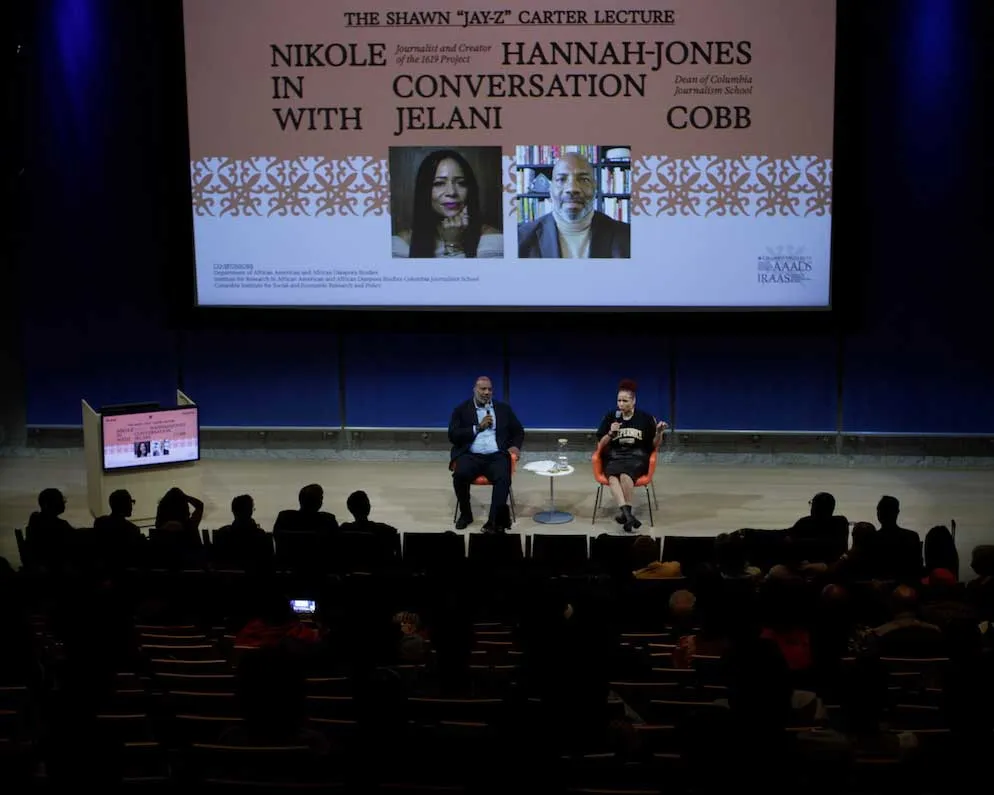
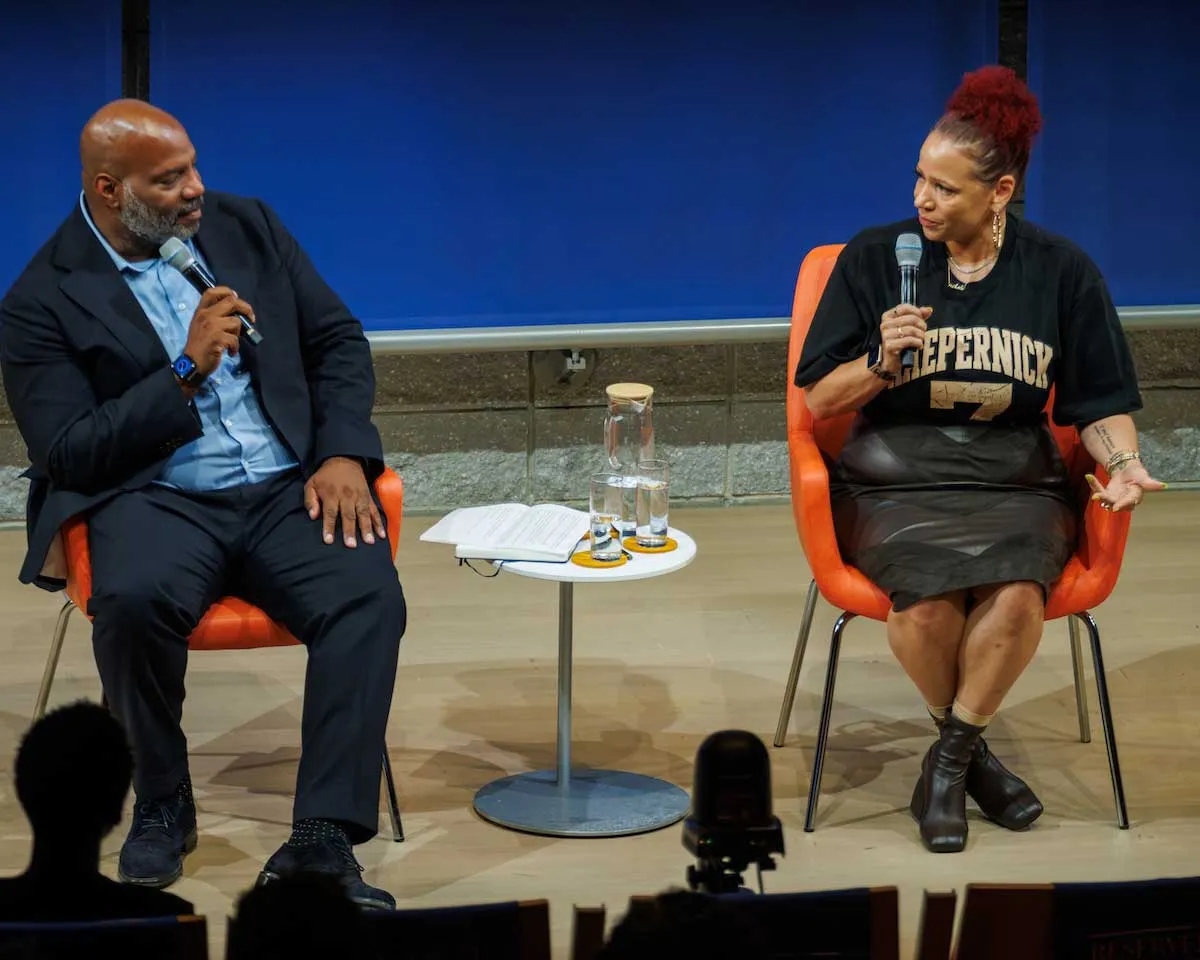
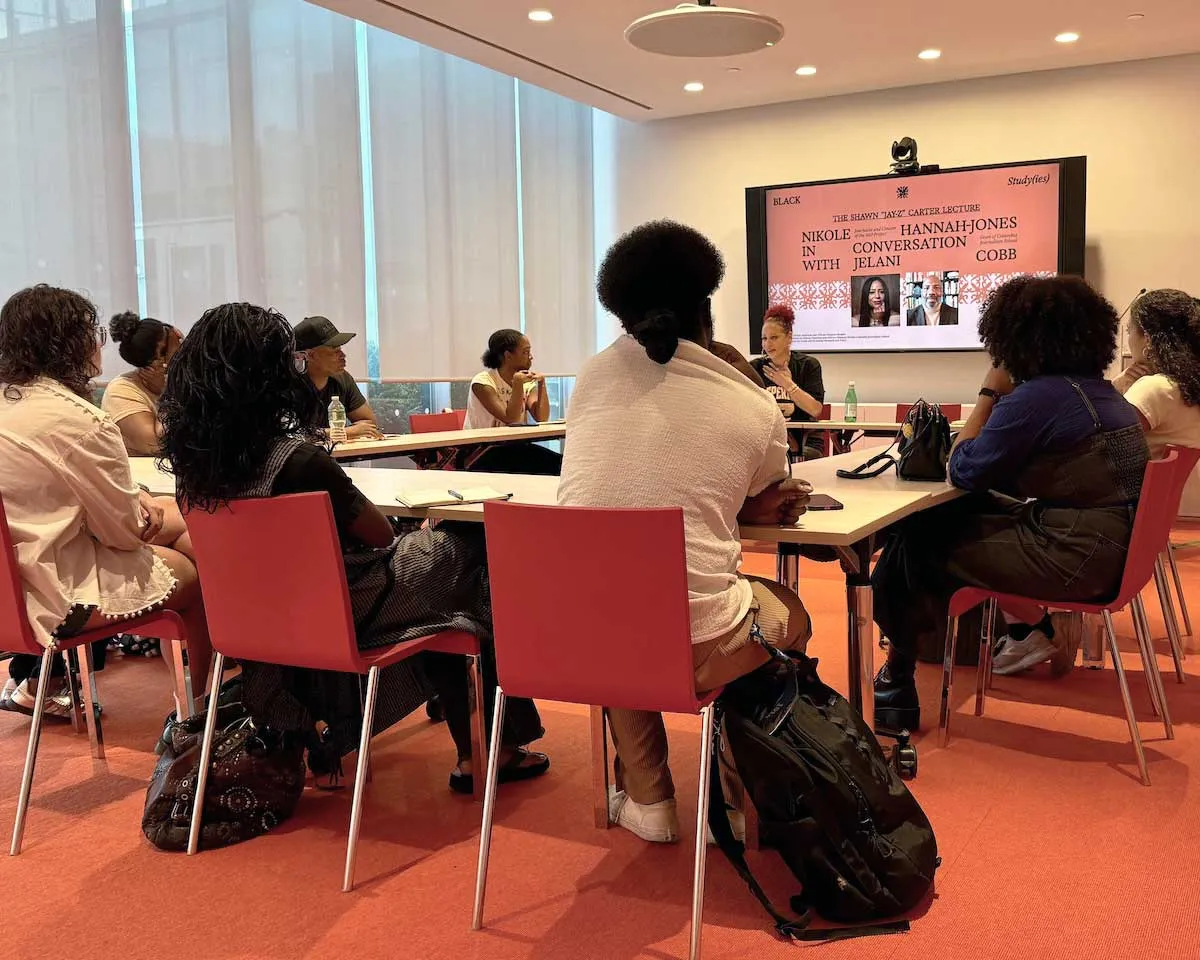
The African American and African Diaspora Studies Department hosted its fourth annual Shawn “Jay-Z” Carter Lecture with Nikole Hannah-Jones, the Pulitzer Prize and Emmy award winning journalist, professor and creator of The 1619 Project.
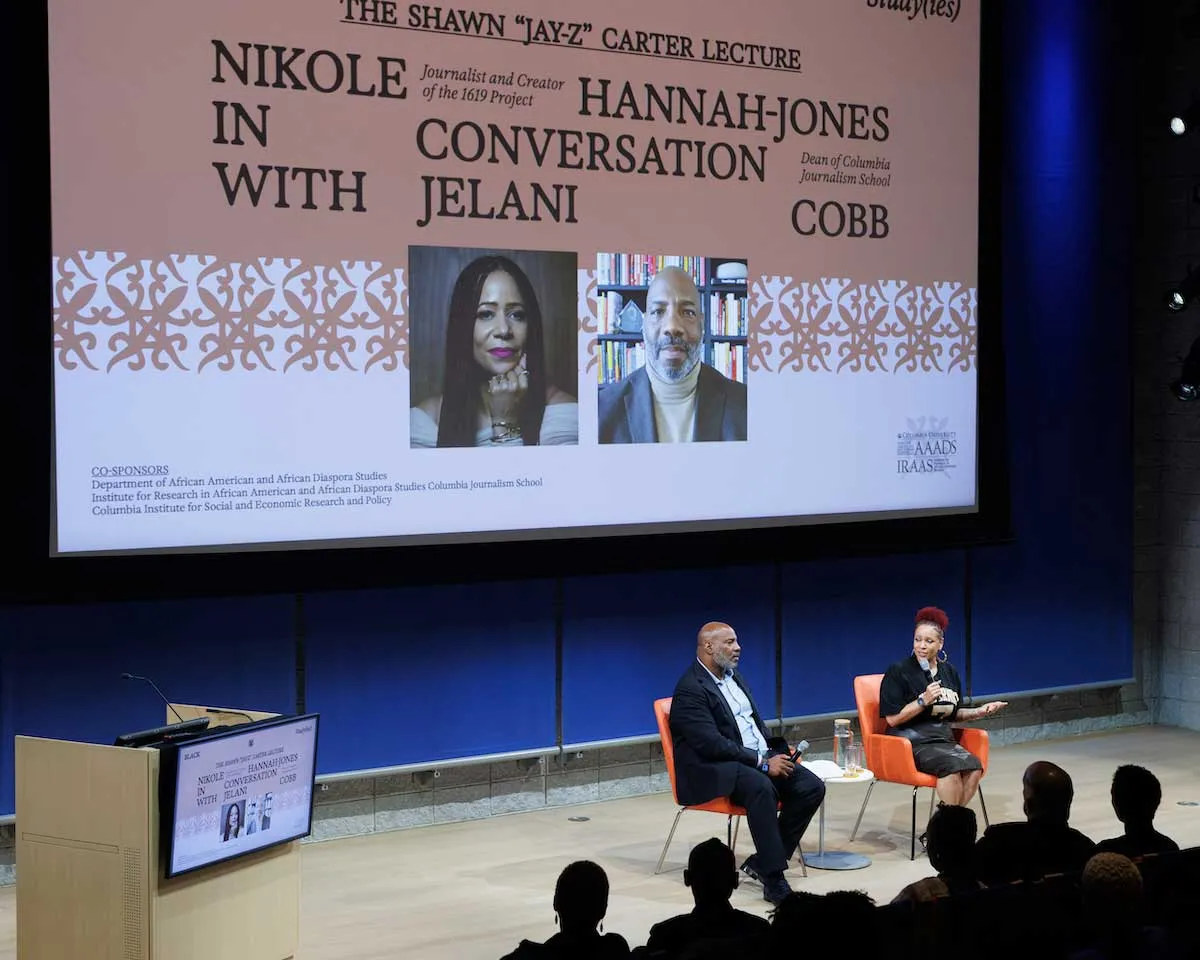
Department Chair Mabel O. Wilson introduced Hannah-Jones, who was interviewed by Columbia Journalism School Dean Jelani Cobb at the Sept. 18 event held in the Lee C. Bollinger Forum.
Wilson, the Nancy and George Rupp Professor of Architecture, Planning and Preservation and a professor of African American and African Diaspora Studies, recounted some of Hannah-Jones’s many accomplishments, paying particular attention to the landmark 1619 project. As Hannah-Jones describes on her own website, the project was first published by The New York Times in 2019 “on the 400th anniversary of enslaved Africans' arrival in Virginia, this historical reframing centers Black Americans' contributions to democracy, economics, and culture—challenging conventional narratives about our national identity.”
Image Carousel with 9 slides
A carousel is a rotating set of images. Use the previous and next buttons to change the displayed slide
-
Slide 1: long shot of the stage
-
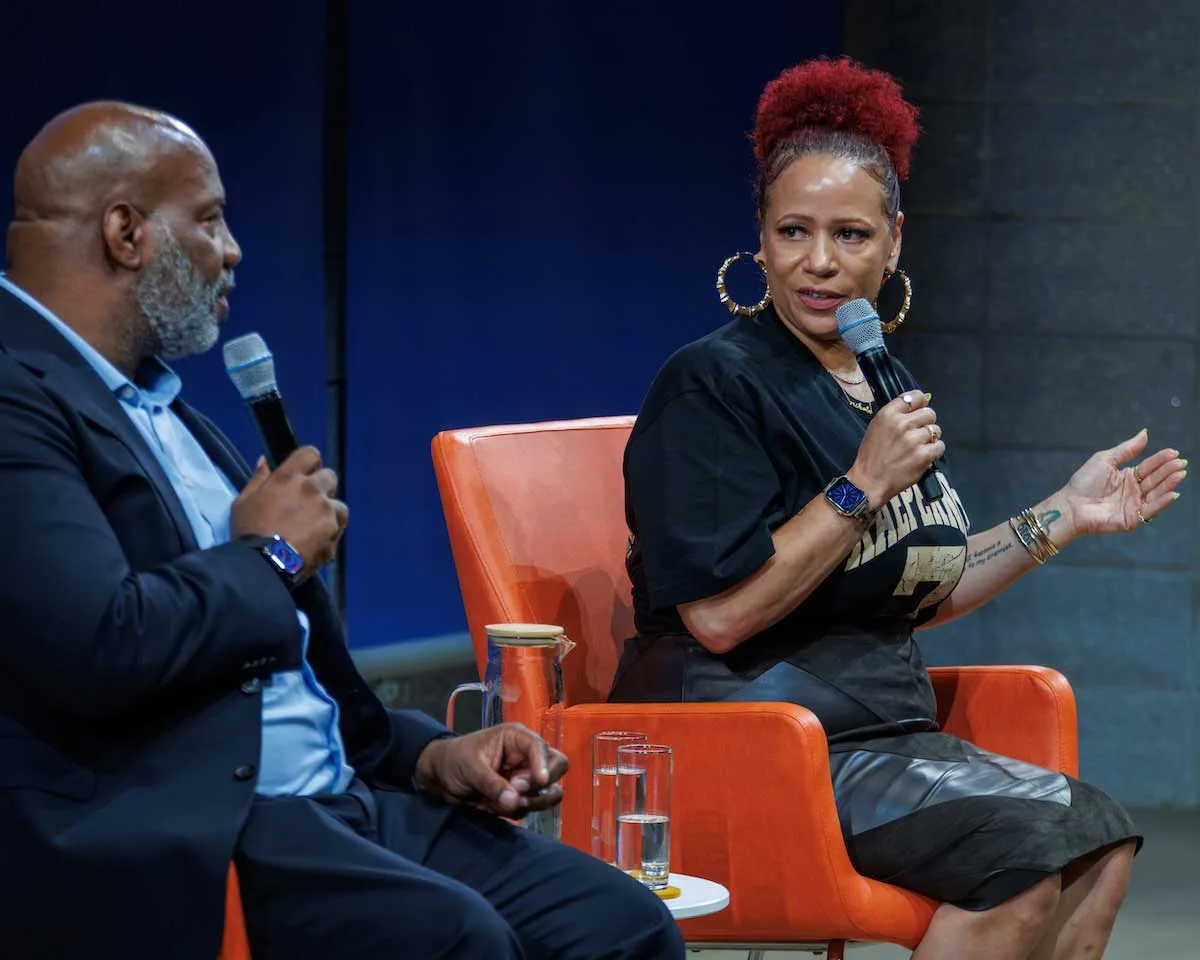
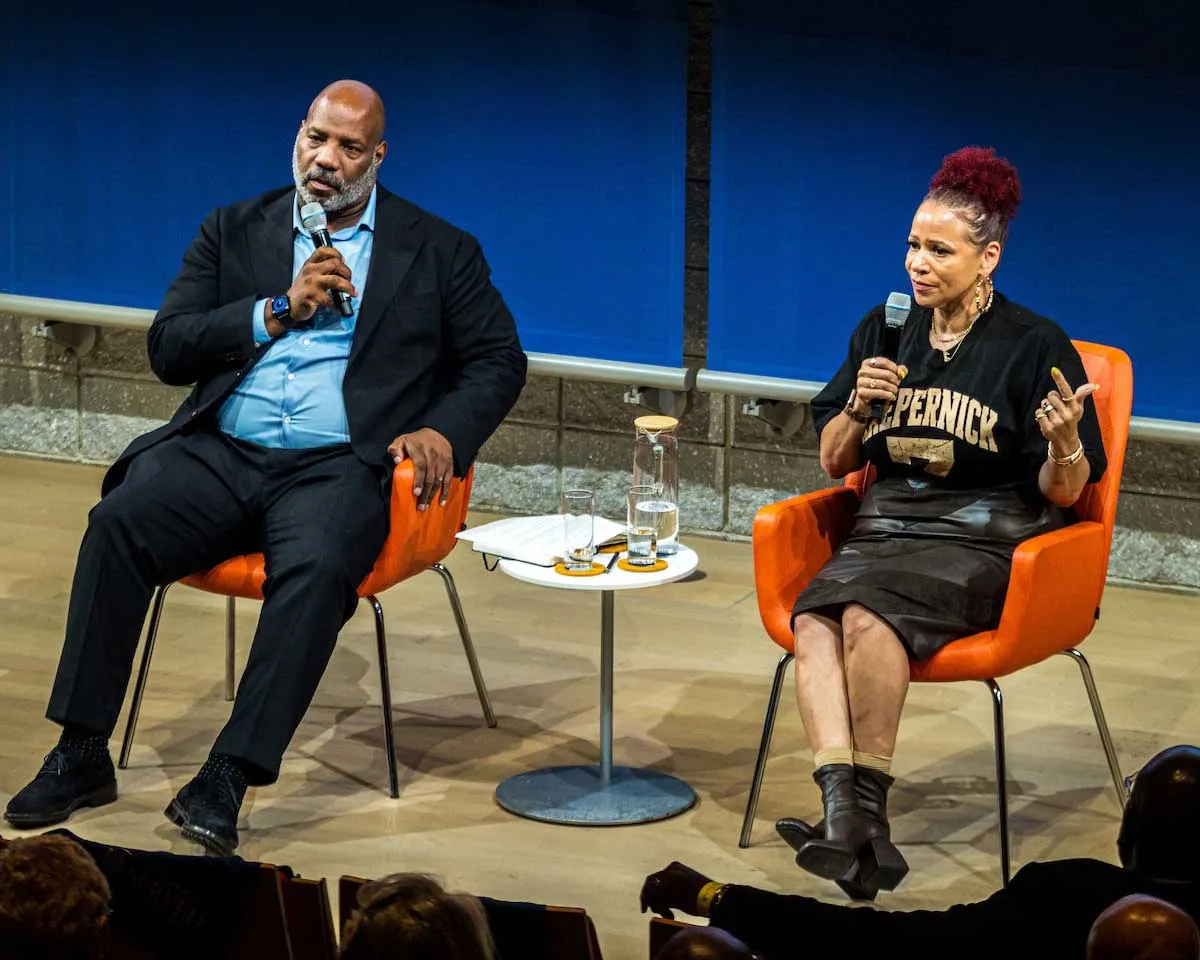
Slide 2: Jelani Cobb with Nikole Hannah-Jones
-
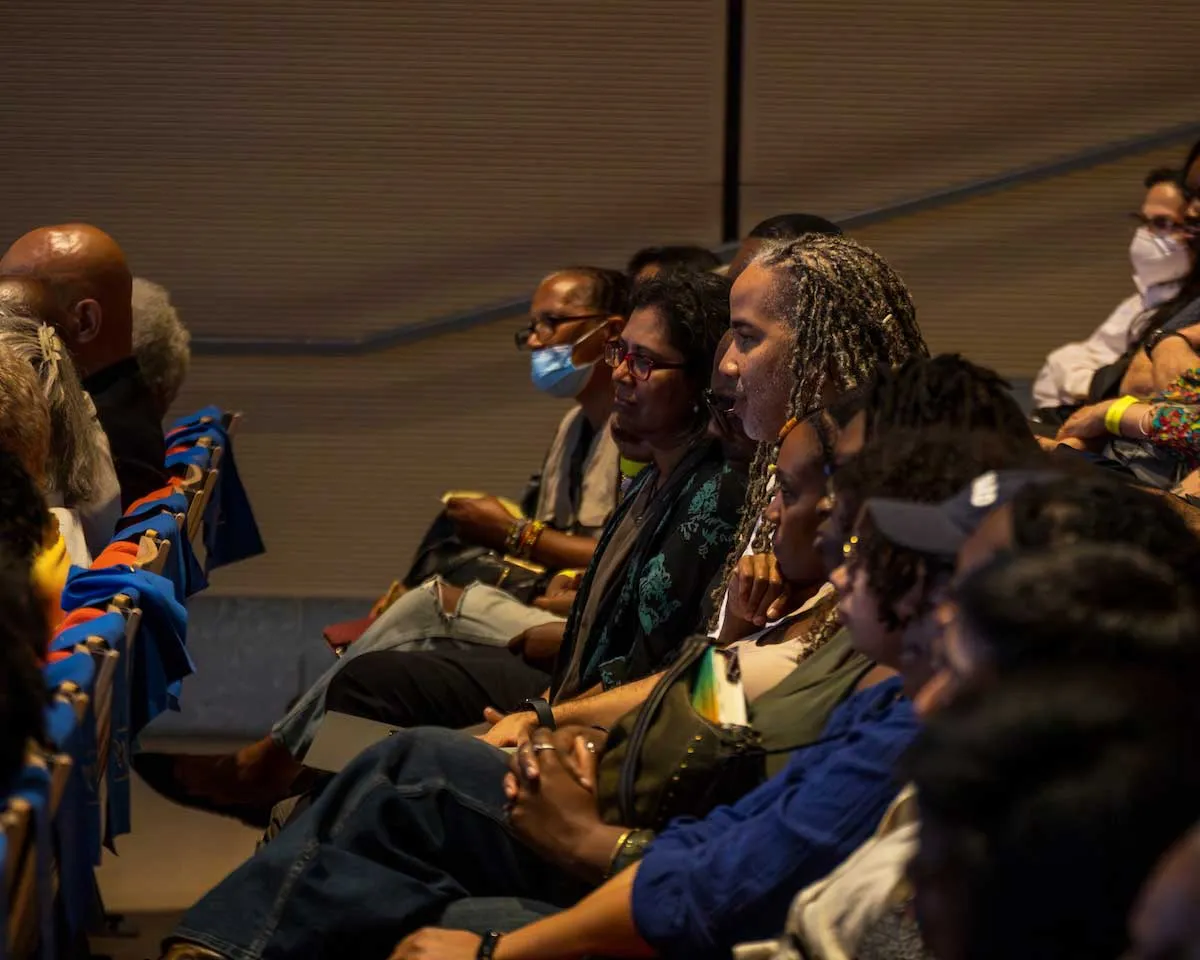
Slide 3: the audience
-
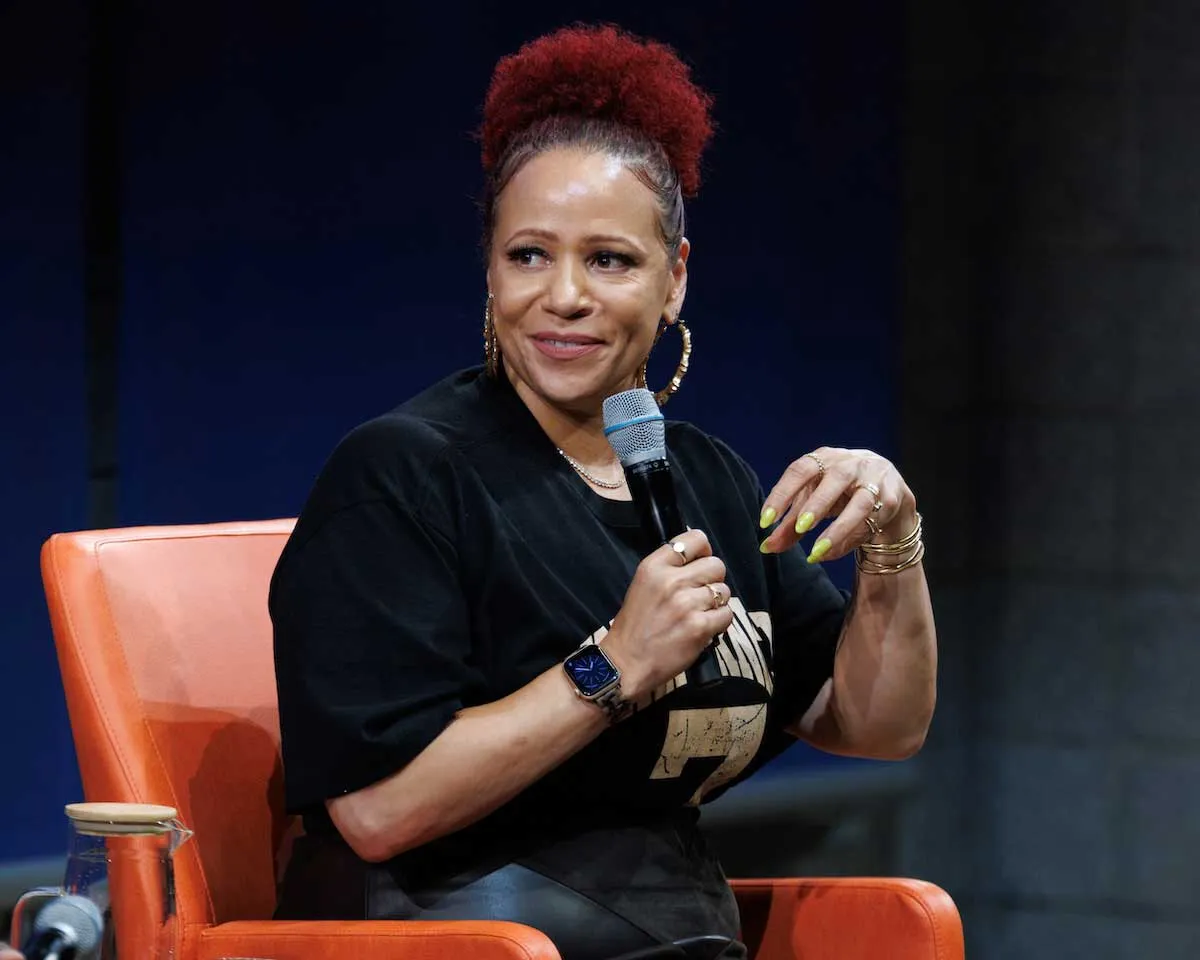
Slide 4: Nikole Hannah-Jones
-
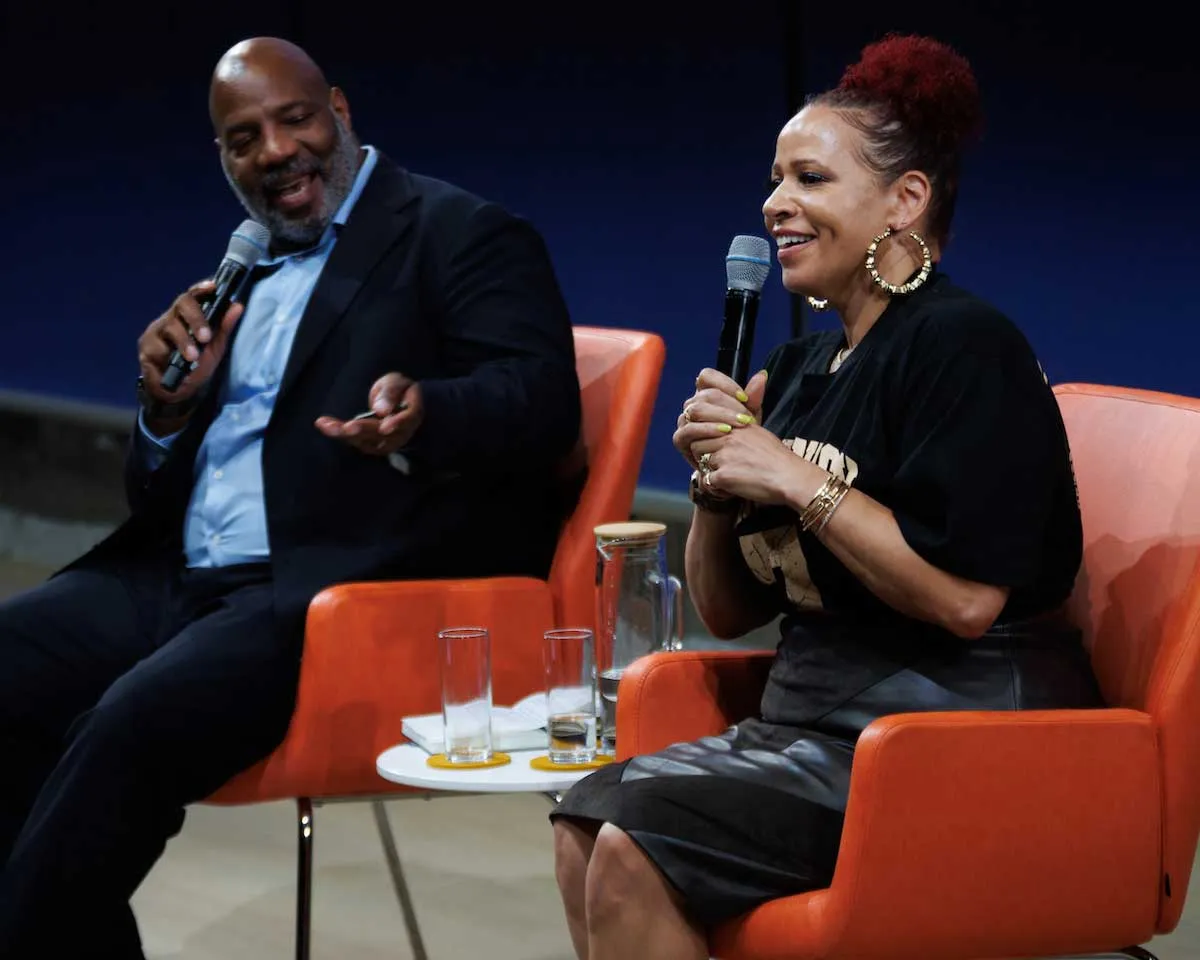
Slide 5: Jelani Cobb and Nikole Hannah-Jones
-
Slide 6: Jelani Cobb and Nikole Hannah-Jones
-
Slide 7: Jelani Cobb and Nikole Hannah-Jones
-
Slide 8: Jelani Cobb and Nikole Hannah-Jones
-
Slide 9: Nikole Hannah-Jones in a classroom with students
In her introduction, Wilson put the project in historical perspective, noting that Hannah-Jones’s work continues what Carter G. Woodson began in the 1920s.
“James Baldwin said it well in a 1968 hearing on what would decades later become the National Museum of African-American History and Culture: "One of the stumbling blocks that is the nature of the black experience in this country indicates something about the total American history which frightens white Americans."
“Journalist and scholar Carter G. Woodson understood that terror all too well. And in the wake of the urban programs and lynchings of the Red Summer of 1919, he founded Negro History Week, now Black History Month, in 1926. And so as we mark the 100th anniversary of Woodson's enduring public black history project to study and publicize the centrality of black labor, culture, and contributions to the nation in the fight for equity and justice, I could think of no equivalent in the 21st century that had rattled the white columns that prop up the national mythos of exceptionality by orchestrating a chorus of hard truth telling than Professor Hannah-Jones's The 1619 project.
“Now, with a commitment to fostering public discourse with respect, caring, and a deep understanding for how the past shapes the current moment and beyond, Nikole demonstrates how Black studies makes and takes place.”
Hannah, who covers racial injustice for The New York Times Magazine, is the founding Knight Chair in Race and Journalism at Howard University. She also founded the Ida B. Wells Society for Investigative Journalism, the 1619 Freedom School, the Center for Journalism & Democracy at Howard University, and Iola’s Lyceum. Her latest venture, the North Star Books + Bar, will open in Brooklyn this fall.
Cobb, who has been on the journalism faculty since 2016 and a staff writer for The New Yorker since 2015, picked up part of Wilson’s introduction to highlight Woodson’s contribution. He pointed out that the first two black people to earn PhDs at Harvard – W.E.B. DuBois and Woodson – earned them in history.
“The ink is barely dry on the Emancipation Proclamation,” Cobb said. “Uh, what are these dudes doing at Harvard studying history? Like, why history? It was because they understood that they were in a narrative war.”
By highlighting the history of Black people, Cobb said Woodson created a Negro history bulletin for Black teachers to show Black people they have a history.
“This was about creating a body of knowledge that would justify, that would define our humanity, defend our humanity and justify our existence as equal human beings in this country and in this world.”
Fast forward a century, Hannah-Jones pointed to current efforts by white nationalists in the Republican party – in which she includes President Trump – trying to erase slavery from Black history and actually make claims that the civil rights movement led to laws that discriminate against whites.
“You have to erase the history, right?,” she said. “If you're going to say affirmative action is unfair to white people, then you can't talk about 250 years of exclusion. You can't talk about how these institutions were literally forced by court order and sometimes black folks … had to be guarded by the military with bayonets to enter these institutions and then say that white people are actually the victims of discrimination.”
Hannah-Jones, who was wearing a T-shirt with the name Kaepernick on the front, said all this matters in an era when leaders are trying to recreate the old racial hierarchy and justify it by not saying “we’re racist” but by saying “we are the victims of racism.”
Having a history and proclaiming it is vital, she said.
“Carter G. Woodson understood both that we have to be able to tell our own history, but we also have to be able to push back against the eraser of our history and what this country actually is.”
Cobb went on to ask Hannah-Jones about numerous other topics, including her love of history, connecting history to journalism, the illusion of meritocracy, and finally a critique of modern media.
“If we are the fourth estate, if we are the firewall of democracy, we have failed,” she said.
Journalism was failing us leading up to the first Trump administration and it continues, she said.
“These notions of objectivity and false balance means that just what we said about the NABJ, an organization I love, inviting Trump and platforming Trump, that you can lead a coup, that you can lie, that you can be corrupt, and we still have to give you equal airtime,” she said. “We still have to say, well, he said this and he said that. There's a truth. We did not know how to cover someone who lied unabashedly. We did not want to call him a liar because that didn't seem polite or as if you were being partisan or taking a side.
“And I would say constantly, the truth is not partisan. And we also didn't feel our job to defend democracy that we're just supposed to be witnesses, right? But we're not stenographers… our job as journalists is to defend democracy, which means to defend democratic freedoms.”